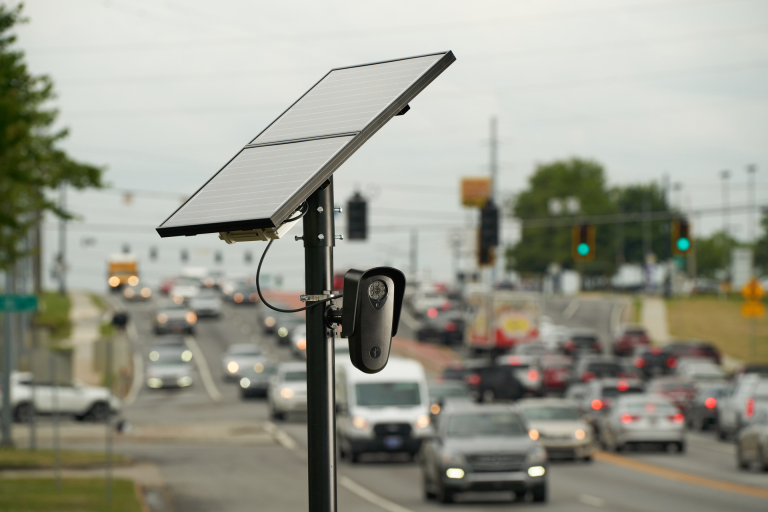
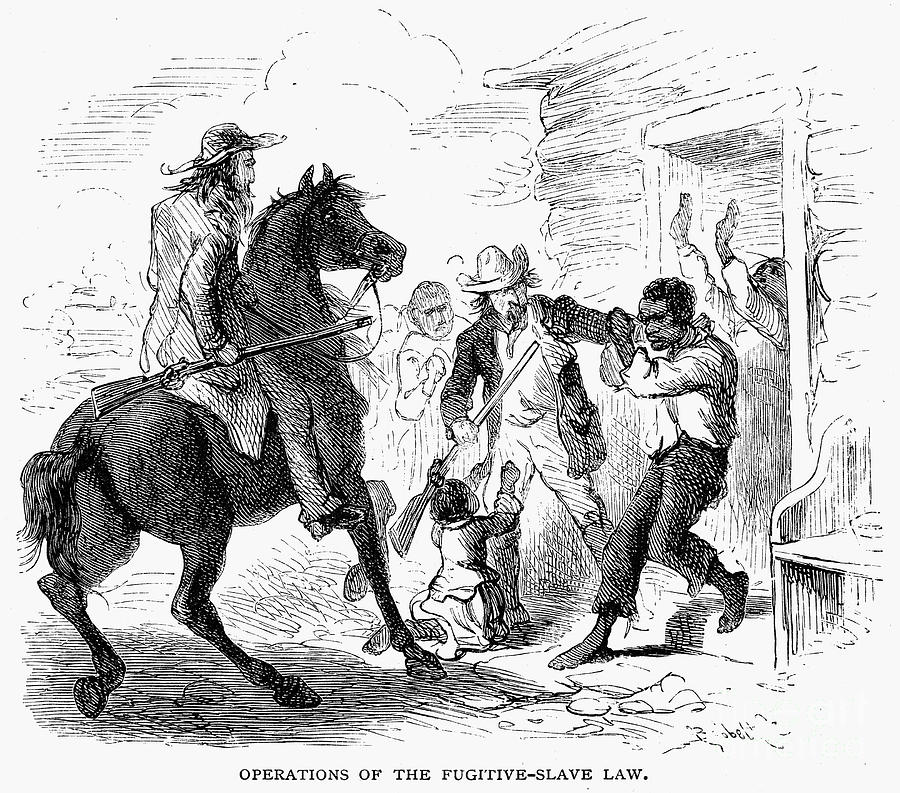
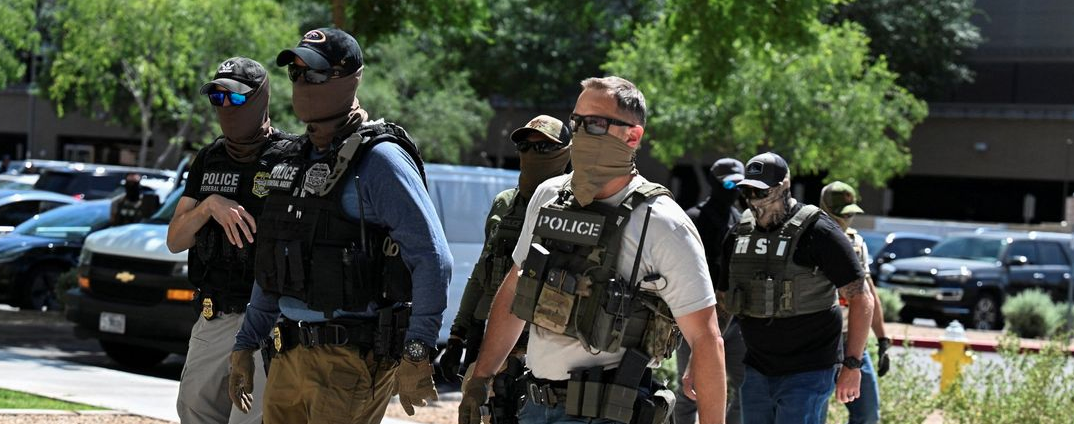
This letter was sent to the Town Council of Windsor Connecticut regarding an ongoing debate in the town over the use of video data collected by Windsor police and shared to outside agencies via Flock. FOIA requests to WPD had revealed numerous access incidents by federal immigration departments, and at least one incident of a Texas Sheriff's office accessing the system to search for someone for the stated reason that she had "had an abortion."
Dear Council Members,
I was unable to attend the Council meeting last night, but I did want to take the opportunity to share my concerns about the use of Flock cameras in our community.
There is no doubt that retroactive video data, shared across departments, can help solve crimes more quickly and at lower cost. Public safety is important, but any benefits must be carefully balanced against the rights and security of our residents.
History warns us of the dangers of law enforcement tools being used across state lines in ways that undermine individual rights. To discourage enslaved people from escaping the barbaric laws of slave states, the Fugitive Slave Act co-opted other states’ law enforcement resources. “States rights,” in this case, could only be maintained by forcing other states to act against their own citizens’ conscience and the basic dignity and autonomy of people within their borders. The Fugitive Slave Act was a major factor leading to the Civil War and remains a stain on this nation’s history.
There are strong echoes of this now. Some states have criminalized reproductive health care for erstwhile protected classes of citizens, and have also criminalized providing aid to people trying to access that care. As with slavery, the states’ unequal treatment of people before the law is rationalized by religious belief and extra constitutional claims of “states’ rights.” These states are using technologies like Flock cameras to track their residents who travel elsewhere for legal medical procedures. They are also passing civil laws to extend their reach across state lines. This effectively deputizes their citizens to enforce state laws, akin to the bounty-hunting system that existed throughout the antebellum period.
In addition to this retrograde legal environment, we’ve also seen the emergence of masked federal agents abducting people and moving them between states without extradition, without meaningful accountability to the public, and without accountability to the judicial system. Immigrants, documented and undocumented, already face the constant threat of dislocation, deportation, and family separation. These paramilitary law enforcement resources can easily be refocused to impose unjust state laws across other states like our own. With one executive order, local camera data can be used to locate health care providers in our town and send them to face felony charges in other states.
While I understand the potential crime-solving value of these systems, I urge the Council to prioritize the rights and safety of Windsor’s residents and visitors. A prudent course would be to suspend implementation until the Council can guarantee that these systems will not expose Windsor residents, visitors, or providers to out-of-state legal risks.
Please act now to protect our neighbors and the medical professionals our community depends on.
This piece appeared in the Windsor Journal on May 2, 2025.
Dear Neighbors,
Though I’ve lived in many places around the United States, I’m proud to have made Windsor my home. One thing I noticed right away when I started to get involved in local matters is Windsor’s deeply ingrained tradition of civility and bipartisanship. Even in the Land of Steady Habits, our civic culture stands out as civil, even cordial. Neighbors and political adversaries talk over beers and across fences. But in recent months, something in our civic culture has shifted, and not for the better.
During the Broad Street referendum in March, volunteers (especially women) were subjected to curses and epithets from passing cars. As I was putting up Yes signs in the Center, I was nearly struck by a pickup truck that veered out of its lane toward me, then sped through three red lights up Poquonock Avenue. Later, a prominent opponent of the project explained to me, in all seriousness, why someone might feel justified in attempting vehicular assault in the context of the referendum. This is not normal.
It didn’t stop there. During the same campaign, elected officials lied about crash statistics in the Center, facts that directly impact the physical safety of Windsor residents. Regardless of your views on lane widths, roundabouts, etc., our representatives have a duty to tell the truth, especially when it concerns public safety. These lies were amplified, and further distorted, by a local political action committee, “Concerned Windsor Citizens,” which, for all their supposed concern, repeatedly failed to meet even the most basic filing and attribution requirements under Connecticut campaign finance laws. They’ve paid several fines in recent months for these violations. Again, this is not normal.
Most recently, the same group ran an ad in this paper riddled with typos and grammatical errors, urging residents to “Make Note of who has those YES Signs as they are the One’s” [sic] who want to increase the town budget. Is this what we’ve come to—political discourse that reads like a ransom note?
The word “Orwellian” has become cliché in recent years, but sometimes the shoe fits. Orwell’s Nineteen Eighty-Four devotes entire chapters to the horror of a society where neighbors are encouraged to monitor and report on one another. He also warns of what happens when political actors view their opponents not just as wrong, but as inherently illegitimate. Once that idea sets in, all acts can be justified. That, too, is not normal.
I’ve been surprised by our reluctance to address this shift in political discourse in town. Yes, Windsor has a laudable tradition of civility. We don’t all have to agree: we won’t. But we should demand that civic and political groups engage the public with a good-faith commitment to the truth. We do not have to accept lies from public officials, and we absolutely cannot accept political intimidation. Civility without accountability does not serve the public good.
The piece appeared in the Windsor Journal in March of 2025.
Hello neighbors,
The referendum to approve the Broad Street Traffic Calming and Pedestrian Safety project failed by a roughly 42% to 58% in a high-turnout vote. I won’t sugarcoat it—this was a decisive result. The only district that supported the project was Windsor Center were the project is actually located, which is both telling and deeply disappointing.
I know this might sound odd right now, but I am so grateful for this experience. It has been a privilege to meet new friends and deepen existing relationships as we did the hard work of democracy together. I never expected this level of individual support, and I am in awe of the time and effort our friends and volunteers poured into this effort.
One unexpected outcome of our outreach was how many people came up to me, introduced themselves, and shared their personal stories of being injured in this neighborhood—or of friends and family members who have been hurt or killed. Just last week, a man told me about his brother, who was struck by a drunk driver on Bloomfield Ave and died at just 12 years old. It’s difficult to recall that conversation without tearing up. I can’t express what an honor it has been for neighbors to share their pain and their stories with me. We hear them, and we are not giving up on them.
We expected some NIMBY pushback. What we didn’t anticipate was how this referendum would take on the tone of a culture war, nor the outright misinformation spread by elected officials and even a few town employees. Insults and epithets were hurled at residents putting up YES signs, with greater frequency at our female volunteers. I also had to file a police report after putting up YES signs in the Center. A pickup truck swerved out of the travel lane to miss me and the car my daughter was napping in by inches, and then immediately ran all three red lights going up Poquonock Ave from Broad Street. We knew this would be an uphill battle, given the national climate, to say nothing of legitimate local concerns over property taxes. But we did not expect people’s anger and resentment to override Windsor’s tradition of bipartisanship and civil discourse. This passed the Town Council in a bi-partisan vote, after all. It’s incredibly difficult to have a reasoned conversation about detailed infrastructure plans in the middle of a culture war debate. Opponents of this project took full advantage, stoking fear and anxiety to make sure a rational, empathetic discussion never had a chance.
I respect the outcome of the referendum, but I am deeply saddened by the incursion of callousness, misinformation and political intimidation into Windsor politics. Broad Street remains dangerous. Windsor Center residents will attest to this fact, and publicly available data proves them right. We will continue to advocate to address this dangerous roadway in our neighborhood, and we will not be silenced or intimidated.
This project has suffered a major setback, but the support from Windsor Center points to a clear need for safety improvements in this neighborhood, much as other neighborhoods have concerns about speeding on their own roads. The town took a maximalist approach to Broad Street, which we fully supported because of the obvious need and the complications of doing this kind of work while meeting CTDOT standards on state roads. Pedestrianization often starts small, however—with inexpensive materials like paint and temporary concrete planters. Some opponents of the project expressed a desire to see more temporary fixes attempted before a full configuration: they may well get their wish. We will continue to support large-scale projects, but we’ll also advocate for neighborhood-level safety improvements throughout Windsor, wherever residents are unsafe.
All of this is to say: the feedback from the voters on this specific project was clear and we respect the outcome of the referendum, but we’re not done advocating for a safer Broad Street. Safety is a process, not a destination. We still live here. Collisions still occur with startling regularity. People are hurt. Lives are put at risk.
This road is still a tragedy waiting to happen. I sincerely hope that reasonable opponents of this project were earnest when they said it was the specifics of this project’s design and funding that they objected to, and that we don’t have to wait for a tragedy to implement common sense road safety measures.
Thank you again to everyone who voted, and thank you to everyone who poured their time, energy and stamps into making Windsor a safer, thriving community.
This piece appeared in the Windsor Journal in February of 2025.
There are several persistent myths about roundabouts and road diets that often lead to misunderstanding. Here are a few of the most common ones:
“Roundabouts are dangerous.”
Decades of research show that roundabouts are safer for all users, especially pedestrians, who experience a 50-80% reduction in collisions, serious injuries, and fatalities.
“Roundabouts are a proven safety countermeasure because they can substantially reduce crashes that result in serious injury or death.” — Federal Highway Administration
“Roundabouts are safer intersections for all users.” — Connecticut Department of Transportation
“Roundabouts are designed to improve safety for all users, including pedestrians and bicycles.” — U.S. Department of Transportation
“Traffic-calming measures, such as roundabouts and speed bumps, are engineering approaches designed to reduce vehicular speed and, thus, decrease the number of pedestrian crashes and associated injuries.” — American Academy of Pediatrics
This is especially true for single-lane roundabouts like those proposed in the Broad Street Project, which consistently show reductions in all crash types, unlike some multi-lane designs.
“Drivers won’t know how to use them.”
Connecticut drivers adapt quickly to roundabouts. The two roundabouts installed in Glastonbury have resulted in 40% and 60% reductions in crashes at those intersections, as discussed in the Hartford Courant article “Glastonbury roundabouts significantly reducing collisions after 2 years in operation.”
First Selectman Ed Chmielewski of Salem said of the roundabout installed at the intersection of state roads 82 and 85, “I think it has saved lives.”
Granby development director Abby Kenyon, reflecting on the roundabout installed at Route 202 and Notch Road in 2020 remarked, “the complaints have really died down; the feedback now is largely positive.”
Roundabouts are increasingly common in Connecticut, and contrary to some claims, Connecticut residents have proven themselves perfectly capable of learning how to navigate them.
“Roundabouts slow down emergency response times.”
Roundabouts are far less likely to become backed up than lighted intersections, enabling traffic to clear for emergency vehicles more quickly. “Studies by the Federal Highway Administration have found that roundabouts can increase the traffic capacity by 30 percent to 50 percent compared to traditional intersections.” — The Open Transportation Journal.
Because they are better able to handle unexpected traffic surges and prevent backups, emergency vehicles can move through more efficiently. In free-flowing conditions, fire trucks, ambulances, and police vehicles can pass through without stopping, unlike at a red light.
“The project is too expensive.”
Roundabouts and road diets are more cost-effective than signalized intersections. They reduce the need for police enforcement, as speeding is controlled by design rather than active monitoring. This frees up Windsor’s police force for more pressing duties.
Roundabouts also save on infrastructure costs. The three traffic lights on Poquonock Avenue in Windsor Center are due for replacement, an expense that could exceed $1.5 million. Roundabouts eliminate the need for costly signal maintenance and use no electricity, leading to long-term savings. They also remain operational during power outages, ensuring safer roads in winter storms.
Residents will also save money. Roundabouts reduce fuel consumption by cutting idling time at red lights, lowering both fuel costs and travel time. They decrease property damage from crashes and reduce medical expenses, lost wages, and insurance costs due to fewer and less severe collisions.
As for the town budget, the total project cost is $6 million, with $3 million already secured from federal funds and $1 million from state transportation grants. Windsor is actively pursuing additional grants to cover the remaining balance.
Even in a worst-case scenario where no additional funding is secured, the estimated cost per household would be about $3 per month over five years. While any tax impact is a serious consideration, this project will enhance Windsor’s financial resilience and ultimately pay for itself through long-term savings at the state, town, and individual level.
“Nobody bikes or walks, so there’s no need for a road diet.”
This argument is circular: “We built an unsafe road, so people don’t walk or bike, therefore we don’t need to make it safer.” The reality is that Windsor’s roads see fatal crashes almost every year. Just because residents make the rational decision to avoid walking or biking on unsafe streets doesn’t mean the town has no obligation to make those street safer.
Road diets consistently lead to increased pedestrian and bicycle traffic by making streets feel safer. This, in turn, boosts local economic activity. A prime example is Hamburg, NY, “Completed in 2009, the project has resulted in a 60% decrease in crashes and 90% decrease in serious injuries. Unexpected by the State, the project has also catalyzed far-reaching social and economic benefits for the village, which has seen a steady increase in population and public programming. These include a farmer’s market, outdoor movie nights, garden walks, a street music festival and other events.” — Project for Public Spaces
Local business owners were also thrilled with the project’s results, “Our entire village is transformed. Not a day goes by in my store I don’t hear about how everyone loves our village. This project fulfilled every expectation and then some.” — Laura Hackathorn, Village Trustee.
Both roundabouts and road diets improve safety, reduce crashes, and create more livable, business-friendly streets. While myths persist, the data overwhelmingly supports their benefits—they work, and they work well.
This project is about making Windsor a safer, more connected, and more vibrant community—while saving lives and money in the process. Please join me in voting YES for the Broad Street Traffic Calming and Pedestrian Safety Project on March 11.
[ a version of the piece appeared in the Windsor Journal in February of 2025 ]
In a decisive vote Monday night, the Windsor Town Council approved the ordinance for the Broad Street Traffic Calming and Pedestrian Safety Project with a 6-3 bipartisan majority, followed by a unanimous 9-0 vote to send the project to a public referendum on March 11, 2025.
The project has been decades in the making, driven by local residents and advanced through contributions from officials at every level of government. Discussions about improving safety and increasing foot traffic for local businesses began over 20 years ago with the Windsor Center Business Association, a group that later evolved into First Town Downtown. Despite strong local support, the project was repeatedly stalled by the Connecticut Department of Transportation (CTDOT), which historically opposed town-led changes to state-owned arterial roads. The initiative was later incorporated into Windsor’s 2014 Transit-Oriented Development Master Plan and the 2025 Plan of Conservation and Development, adopted in 2015.
Momentum for the project increased when the state legislature granted towns greater authority over state roads, allowing Windsor to seek funding. State Rep. Jane Garibay worked tirelessly to secure necessary funds, while Congressman John Larson secured federal support. Town staff also obtained grant funding to cover the balance of the road diet portion of the project. In 2023, residents successfully advocated for the inclusion of roundabouts to align the project with CTDOT’s Complete Streets Plan, which saw renewed emphasis under Transportation Commissioner Garrett Eucalitto. Town Manager Peter Souza and Economic Development Director Patrick McMahon helped guide the project through extensive design revisions and many public meetings over the years.
During Monday’s meeting, the Democratic caucus reaffirmed its focus on safety and emphasized the importance of giving Windsor residents a direct say in the project. The Republican caucus largely agreed with that principle but voiced concerns about the timing and scope of the initiative.
Among the three opposing votes, Councilors Ron Eleveld and Will Pelkey previously stated that they do not oppose the project on its merits, but believe the public needs more time to evaluate its full scope. Mr. Eleveld also expressed concerns that American drivers struggle to adapt to changes in road design. Pelkey has further suggested expanding the project to include additional pedestrian improvements, such as extending the west sidewalk of Broad Street into the right-of-way, closing the public library parking lot, and eliminating most or all driveway entrances onto Broad Street. Councilor Len Walker, the ranking Republican member, has not publicly explained his opposition. However, at a public meeting last year, he questioned the design philosophy of pedestrian safety features, including pedestrian refuge islands, telling a civil engineer, “Good luck with that.”
During Monday’s meeting, Mr. Eleveld cited a Michigan Department of Transportation study indicating that roundabouts have, in some cases, led to an increase in the total number of crashes, while acknowledging that the same study showed a significant reduction in deaths and serious injuries compared to signalized intersections. The Broad Street roundabouts are designed as single-lane entries and exits, a configuration that CTDOT data shows can reduce total crashes by 40% and serious injuries and fatalities by as much as 80% compared to traditional signalized intersections. The Michigan study cited by Eleveld, “Evaluating the Performance and Safety Effectiveness of Roundabouts – An Update,” highlights the critical difference between single-lane roundabouts, which saw an 8% increase in crashes in Michigan, and multi-lane roundabouts, where crashes rose 123%—while both designs still significantly reduced severe injuries and fatalities. As stated in the first sentence on the The Federal Highway Administration’s (FHWA) roundabout website, “Roundabouts are a Proven Safety Countermeasure because they can substantially reduce crashes that result in serious injury or death.”
Public comments on the project were largely positive, with supporters emphasizing the safety benefits and the potential increase in foot traffic for local businesses. Opponents raised concerns about potential tax implications, whether these projects are more suited for struggling Rust Belt cities, that the current configuration has failed to bring retail back, and the uncertainty of federal spending and its impact on funding. While concerns about the project’s impact on the town budget are understandable, further state funding remains a strong possibility. The notion that roundabouts and road diets are primarily used in Rust Belt towns is misleading—these design principles are standard in modern urban planning across industrialized nations. Supporters of the project agree that the current Broad Street layout is ineffective, which is why change is needed. As for federal funding uncertainty, turning down available funding now because the Supreme Court might overturn the Impoundment Act of 1974 would be a missed opportunity to improve local infrastructure.
Windsor Center has immense potential, but Broad Street remains a barrier to safety, economic activity, and community vibrancy. According to the Connecticut Crash Data Repository, Windsor averages about one crash per day, mostly on four-lane arterial roads. Broad Street alone sees about one crash per month—a concerning statistic for a district that depends on pedestrian activity. Statewide, nearly one person dies on Connecticut roads every day. Windsor has an opportunity to reduce that risk by implementing proven safety measures.
With the Town Council’s approval, the Broad Street Safety Project now moves to a March 11 referendum, where Windsor voters will have the final say. Absentee ballots will be available at Town Hall beginning February 18.
Please join me in making Windsor Center a safer, more vibrant place to walk, ride, and live.
[ This piece appeared in the Windsor Journal in February of 2025 ]
The mid-air collision over the Potomac River this week is an unmitigated tragedy. As of this writing, all 67 people aboard both American Airlines Flight 5342 and the Army helicopter are presumed dead. The sudden loss of so many lives is horrifying and deeply saddening.
Tragedies like this—and far less severe aviation incidents—are always followed by rigorous investigations that lead to safety improvements. In South Korea, a recent crash that killed 179 people prompted the removal of many concrete structures near runways throughout the country. After the 2009 crash in Buffalo, New York, which killed 50 people, the FAA implemented sweeping changes, including stricter pilot fatigue rules, higher experience requirements, improved stall training, and a national pilot record database. Following last year’s Alaska Airlines Flight 1282 decompression incident, the FAA grounded all Boeing 737 MAX 9 aircraft, and the NTSB launched a full investigation.
Because of these rigorous investigations and strict accountability measures, air travel remains remarkably safe, even in spite of high-profile disasters like Flight 5342. The death rate per mile traveled by air is thousands of times lower than that of passenger vehicle travel. It’s a modern marvel that people can spend a lifetime flying and experience such negligible risk. In fact, the paradox almost explains itself: air travel feels scary, so we refuse to accept injury and death as inevitable—and we go to enormous lengths to make it as safe as possible.
But this raises an important question: if we refuse to accept death and injury as a normal part of air travel, why do we accept it as a normal part of automotive travel?
The comparison is striking. I recently drove through Windsor Center and saw the aftermath of a serious crash at the intersection in front of Geissler’s. The car’s hood was caved in, windows shattered. No emergency responders remained. Traffic flowed around the wreck, drivers adjusting slightly to navigate past it. I did the same. It was a relatively unusual sight—but not shocking. There was no media coverage of the crash. If a public figure had been involved or if the crash had caused a major traffic jam, maybe the news would have paid attention. But as it was, the incident passed unnoticed. Perhaps police issued a citation, but no one examined whether the intersection’s design played a role, whether vehicle visibility issues contributed, or whether both drivers had a clear instruction on right-of-way rules during their driver safety course. There was no systemic review—because we, as a society, don’t expect one. Car crashes are just a fact of life: they are banal.
The U.S. sees 46,000 auto-related deaths per year—the equivalent of an American Airlines Flight 5342 disaster happening every 12 hours. Every two months, we lose as many Americans to car crashes as we did in the entire Iraq and Afghanistan wars. Vulnerable populations—children, the elderly, the unhoused, and people with disabilities—are disproportionately affected. The deadliest day of the year for children, by far, is Halloween as hundreds of kids are hit by cars while trick-or-treating in their own neighborhoods. But these tragedies rarely make the news. The NTSB does not spring into action every time someone is struck in a crosswalk. Departments of transportation do initiate systematic reviews when people die in car crashes. We simply mourn, care for the injured, and move on.
Connecticut is not immune. As of this writing, someone has died on our roads every single day of 2025. Windsor is no exception either. According to the Connecticut Crash Data Repository, we experience traffic accidents almost daily and lose roughly one resident per year to auto-related deaths. The most serious crashes happen on four-lane arterial roads, but even local streets see their share of serious injuries. The sections of Poquonock Avenue and Broad Street under consideration in the Broad Street Safety Project have seen more than one crash per month over the past decade.
We do not accept this level of risk in any other part of our lives. And what makes our indifference even more striking is that these crashes don’t happen in private spaces. They happen on our roads—our public property. The only comparable cause of accidental death in America is gun violence. Unlike many states, Connecticut has taken a common-sense public health approach to gun regulation, leading to lower firearm deaths per capita than many other states, and less than half that of our automotive death rate.
Windsor has a rare opportunity to take meaningful action. Every design element in the Broad Street Safety Project is backed by decades of research showing benefits across the board. These projects have been proven to increase property values, boost sales tax revenue, spur development, lower municipal maintenance costs, reduce fuel consumption, lower insurance costs, reduce harmful air particulates, and shorten driver travel times. Towns from Pasadena to New Britain, Grand Rapids to Edgewater have demonstrated that well-planned traffic calming and pedestrian safety improvements lead to more vibrant, resilient, and economically sustainable communities.
But ultimately, this is about saving lives. If we do nothing, more people will be severely injured—or killed—on Broad Street, given the current crash rate and the decades-long lifespan of projects like this.
Do I wish the NTSB took automotive deaths as seriously as plane crashes? Yes. Do I wish the Connecticut DOT was more responsive to local safety concerns? Absolutely. But the reality is that these improvements happen at the local level. I trust the FAA and NTSB to take the tragedy in Washington seriously, and to take meaningful action to keep such tragedies from happening in the future. But if we want the same consideration for the tragedies we experience on our own roads—if we want a safer Broad Street and a more vibrant Windsor Center—we have to make it happen ourselves.
Please join me in taking this small step toward a safer country—and a huge step toward a safer Windsor.
[ This piece appeared in the Windsor Journal on December 18, 2024 ]
Several years ago, I sat down at The Bean with a cup of coffee and a laptop to write a letter to our town manager, urging him to consider bike lanes in the design of the Broad Street reconfiguration (commonly called the road diet). A few paragraphs in, a loud bang outside was followed by sirens. A man on a bicycle had been struck by a car at the intersection of Maple Avenue and Broad Street. An ambulance soon arrived to take the bicyclist to the hospital, leaving behind bits of broken headlight, the man’s bike, and blood splatter on the pavement.
Scenes like this are all too familiar in the Center. Every day, ten thousand cars drive down Broad Street. Seven out of ten don’t stop in the Center—they’re just passing through. About one-third of these drivers exceed the 35 mph speed limit. That may not sound especially fast, but it has serious safety implications for our neighbors. Higher speeds mean drivers have less time to react, leading to more accidents. Multiple travel lanes encourage passing, speeding, and chaotic traffic flow. Unsurprisingly, Broad Street and other state roads in Windsor Center see dozens of crashes each year, many involving serious injuries.
Higher speeds also lead to deadlier accidents. For pedestrians struck by cars, the chance of surviving decreases by 40% when the car’s speed increases from 30 mph to 40 mph. This is the environment many of our neighbors must navigate daily. Residents cross Broad Street for basic services: to visit the post office, file permits at Town Hall, or pick up prescriptions. Children cross the road to reach the Windsor Public Library after school. Families in the Center who walk their children to daycare on Palisado Avenue must traverse 50-foot crosswalks at busy intersections where cars can turn right on red, even during walk signals.
If we do not act, this problem is likely to get worse. Cars are getting bigger, and drivers are becoming ever more distracted. We can’t police our way out of this problem, and it won’t resolve itself. The core issue is the road’s design. It was built to move vehicles through town as quickly as possible, and it’s doing exactly that. Residents and visitors injured in crashes, parents afraid to let their children walk or bike in the Center, disabled residents forced to cross dangerous intersections for basic necessities; all are collateral damage of a design that prioritizes vehicle speed over our safety.
We can do better. The Town Council is currently considering The Broad Street Traffic Calming and Pedestrian Safety Project, which includes essential safety upgrades: reducing Broad Street from four lanes to two with a center turn lane, bike lanes, roundabouts, and sidewalk bump-outs with shorter crosswalks. These design elements have been studied extensively for decades at both the federal and state levels. The evidence is clear and overwhelming: these changes save lives and improve safety for pedestrians, cyclists, and drivers alike.
The town’s top priority must be the physical safety of the people who live here. Please vote in favor of the The Broad Street Traffic Calming and Pedestrian Safety Project on February 11th, 2025.
[ This article appeared in the Windsor Journal on August 23, 2024 ]


Our town is at a crossroads. With the upcoming Founders Square and other mixed-use developments, we have an opportunity to support this new growth and address long-standing safety concerns and make Windsor Center more vibrant and welcoming. The Center improvement plan—which includes options for reducing lanes on Broad Street, the installation of roundabouts at two key intersections, and dedicated bike lanes—is the right step forward for everyone; residents, businesses, and visitors alike.

Broad Street is not safe in its current form. With four lanes of traffic, it's a hazard for pedestrians, cyclists, and motorists alike. The wide expanse of asphalt discourages foot traffic, which in turn hampers the ability of local businesses to thrive. The lack of bike lanes forces cyclists to share the road with cars, creating a dangerous mix. The result is frequent vehicle accidents and serious injuries, with little economic benefit to Windsor Center to show for the thousands of daily vehicle trips through Broad Street, most of which do not stop in town. The current configuration does not serve our community's needs.

Reducing Broad Street from four lanes to two, with a center turning lane, will streamline traffic and make the Center a safer and more inviting place for pedestrians. This configuration has been proven to reduce speeding and accidents while maintaining traffic flow. The extra space gained from reducing lanes will be repurposed for dedicated on-street parking, bike lanes, improved greenery, and expanded sidewalk bump outs for pedestrians, enhancing the overall environment of the town center.

Adding bike lanes to Broad Street will make the Center safer and more accessible for everyone. A dedicated space for cyclists will reduce the likelihood of accidents and make biking a viable option for more residents. Research shows that bike lanes not only improve safety but can also boost local economies. Numerous studies have shown improved economic activity and property values near dedicated bike infrastructure, while also improving safety for cyclists of all ages and motorists who no longer have to share lanes with cyclists.

The proposed roundabouts where Poquonock Avenue intersects Bloomfield Avenue and Broad Street will improve traffic flow, safety, and walkability. Roundabouts can move many more vehicles than traditional lighted signals, meaning they are better able to handle unexpected spikes in traffic flow caused by backups from Interstate 91. Roundabouts also significantly reduce the likelihood of severe accidents, injuries, and deaths. Roundabouts keep traffic moving smoothly, reducing congestion and the frustration that comes with it. For pedestrians and cyclists, roundabouts provide shorter, safer, more predictable crossing points. Put simply, roundabouts save lives and are better at moving cars.

When combined, these design improvements will not only make our town safer, but also more economically vibrant. This project, in conjunction with the mixed-use developments in progress, offers Windsor the opportunity to leverage the Center's proximity to rail, air, and Interstate transportation, while providing a pleasant place where people want to spend their time and disposable income. Improved infrastructure will attract more visitors, increase foot traffic, and make our town a more desirable place to live, work, eat, and shop.

The Center improvement plan is more than just a set of infrastructure upgrades—it's a vision for a safer, more connected, and thriving community. The business community understands the value of these improvements. Center residents understand the value of these improvements. Civil engineers understand the value of these improvements. It's time for all of us to come together to support this plan. By making these changes, we can ensure that Windsor Center remains a place where people want to live, work, and visit for generations to come. The benefits are clear: let’s embrace this opportunity to enhance our town’s safety and economic future.
The roller coaster of the 2020 election count moved many in the country from a grinding descent into despair into gravity-defying elation at Joe Biden’s election to the Presidency. And, of course, a little less than half the country experienced the exact same sequence of emotions in reverse order.
Few elections have so simultaneously exposed the virtues and flaws of our peculiarly American electoral system. The election went off virtually without a hitch. Despite widespread threats of voter intimidation and veiled threats of violence, actual outbursts were localized and limited. It’s too early to say what exact effect voter intimidation had, but with turnout at the highest level in a century, the most plausible answer is that it backfired spectacularly. Election officials, with a few notable exceptions, did their work in a diligent, competent, non-partisan fashion that gave the clear impression that everything was under control. The wave of legal decisions before the election, though not always just, largely cemented the ground rules in advance of the actual event, in stark contrast to the chaos surrounding the Florida recount twenty years ago. The people voted, the votes were counted; democracy was done.
Of course, that roseate description ignores the glaring injustice, arbitrariness, and anachronism of the overarching framework under which presidential elections are conducted. The 2020 election evinced, yet again, the utter hollowness of arguments in favor of the Electoral College. It does not confer preeminence to small or rural states, but rather designates states that matter, so-called battleground states, as those with a roughly even distribution of Democrats and Republicans, and then orders that subgroup of states by population, the most important swing states being those with the most electoral votes – the literal opposite effect that Electoral College proponents espouse. Arguments that the Electoral College must exist simply because it is in the Constitution are at least being honest that there are no merit-based arguments to support it; however, they fail to explain how an institution that has never been practiced as described in the Constitution can be justified by its mere presence there. The mechanism by which Electoral College supposedly benefits Republicans’ “real America,” namely winner-take-all allocation of electors, is nowhere to be found in the Constitution, and was very much opposed by the document’s primary author.
Biden held a clear, convincing, wire-to-wire lead in total votes, the method used to determine winners in every other election in the country. The only exceptions in modern times are the Mississippi governor’s race (abolished and replaced with a state-wide popular vote this year via ballot initiative) and the Republican nomination race, which allowed Trump to be nominated with a plurality of votes in 2016. The election seemed to hang in balance for days despite a clear indication of the will of the people, by millions of votes. Whatever the benefit of the Electoral College, no one can argue with a straight face that it is worth its concomitant uncertainty and undemocratic distortions to the American political system.
Constitutional issues aside, what are we supposed to make of the election results? Donald Trump was defeated, although Republicans clearly beat expectations by (likely) retaining control of the Senate, and making gains in the house. Democrats got the turnout they were looking for, only to watch in horror on election night as it was matched by an almost equal showing by new Trump voters. The New York Times’s map of partisan directional movement looks like some multicolored, fractal mess with giant swings in both directions from unexpected and, like those in south Texas and Florida, seemingly inexplicable locations.
But the tyrant was defeated and that’s all that matters, right? Your answer to this question probably depends on how seriously you took the Trump-as-symptom argument of the past four years. Democrats’ jubilation after the presidential election call was as good an indication as any that they never really internalized this idea, but rather viewed Trump as an aberration, a cancer on the body politic that could be removed surgically and, once removed, would allow for healing.
Those of us who did take this idea seriously, however, knew the instant the AP called Florida for Trump that, while the most immediate threat to the Republic may or may not be vanquished, the underlying condition would not be cured in this election.
The term “White Nationalism” gets bandied about without much thought to its underlying meaning. The idea is rooted in the understanding of a nation as a grouping of people formed on the basis of common language, history, and/or ethnicity. More importantly, nationalism extends this idea to say that individuals’ rights are only guaranteed by the nation’s sovereignty; a multicultural society denies the nation a state, and thus threatens the nation’s citizens their fundamental rights. One need only consider conservatives’ historical ease in denying rights to those they view as enemies, or even simply outside the nation (blacks, communists, “illegals”, terrorists, etc.), to show that American conservatism has never taken seriously the idea of human or “inalienable” rights, but rather has always considered rights to be granted by the nation in control of the state. Likewise, conservatives have always assumed that they would lose their rights if the state were to fall into the hands of any other group.
This idea of the nation-state as the only guarantor of rights is viewed by many conservatives as the natural order of things, and more importantly that it was made that way by some larger, benevolent force; whether that be God, “the Framers”, social Darwinism, etc. The world has a structure, and conservatives need only trust the plan: have faith.
The world, of course, is more complicated than that. It exists, as is, due to forces intentional and otherwise, compounded over generations. The goal of the Enlightenment was to improve the human condition by identifying and controlling these forces: accept and understand past wrongs, work empirically and collectively to address present problems in order to insure a better future.
Trump is, in fact, a symptom. He is a symptom of a fully realized reactionary movement which rejects Enlightenment ideas of human progress and regards criticism of the status quo as the primary threat to stability rather than the underlying systemic problems that criticism seeks to address. Like all reactionary movements, this movement has resorted to restorative authoritarianism in defense of the status quo: a savior for the white nation-state that will swoop in and silence all the chaos by disappearing critics and sending undesirables back where they belong. This world-view can only render the entire Enlightenment project’s empiricism, skepticism, and reason as threats to the established order.
It is no irony that Trump launched his political career by telling a bald-faced lie, that the then President of the United States had a sordid origin on the dark continent which, to Trump’s mind and the fevered imagination of his reactionary followers, meant the first Black President ought to simply “go back where he came from.” Barack Obama’s presidency, like all inconvenient facts, represented a deep disruption to reactionaries’ sense of equilibrium. America doesn’t have a racist past you see, it’s just minorities “playing the race card,” as if liberals magically willed racism into existence by speaking its name. Obama was a daily reminder of the fragility of the white nation-state, which explains the mouth-frothing vitriol leveled at him, despite being quite politically moderate, initially quite open to negotiation, and ethically unimpeachable.
Engaging this mindset on the facts is counter-productive, however, because stated facts are viewed as the genesis of the underlying problem. Conservatives aren’t homophobic, it’s just that the gays keep rubbing everyone’s noses in it. Climate change isn’t real, it’s just liberals looking for signal in the noise to impose their economic plan on the rest of us. Instruments of violence are the only tools to provide peace in our homes. Trump and his lackeys aren’t incompetent, their agenda isn’t illegal, it’s just a “deep-state” backed by a cabal of liberal leaders who devote their global power to abducting children, raping them and stealing their blood. It is a world-view immune to evidence, which leads ineluctably to immunity to empathy and morality.
Trump has lost the presidency, but the reactionary movement he spearheaded remains, and will remain until it is rendered insignificant through the democratic process, or it ensconces itself into minority rule. What began in 2010 with the birther/Tea Party electoral reaction to Barack Obama will continue for at least another four years, and likely much longer than that.
For those of us of a certain age, it can be difficult to describe to younger people the unbridled optimism that followed the disillusionment of the USSR. It seemed we were “post history” and on the brink of global peace and prosperity. The economic boom of the nineties reinforced this idea for many. Even so early after the transition to a world dominated by a single democratic super power, cracks appeared in the foundation of the body politic. Had we been more attuned to them, these cracks might have forewarned the conversion of the American Conservative party toward self-destructive authoritarianism.
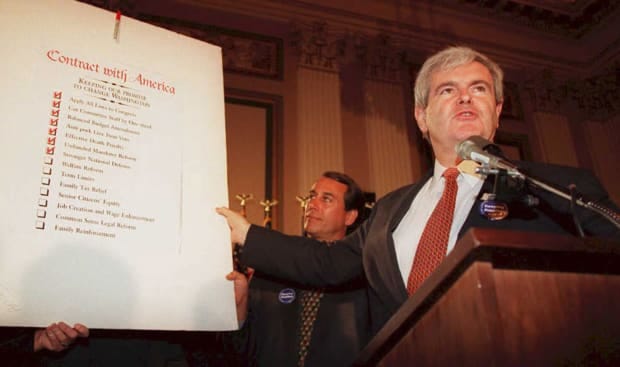
The ’94 Republican/Gingrich Revolution cemented the final success of the Southern Strategy to woo Conservative Southern Democrats to the Republican Party by appealing to latent (or not-so-latent) racism. These appeals were often delivered in euphemisms like “states’ rights” (to do what, exactly?) and stories of mythical Welfare Queens, isolated cases of fraud generalized onto the entire Black ethnic group.
[
Two aspects of Gingrich’s rise help elucidate the underlying cultural conditions that made possible the Republican party’s later decent into madness. The first is the curious fact that, despite Nixon’s successful use of the Southern Strategy in his presidential runs, it wasn’t until after the demise of America’s great existential threat, the USSR, that enough Southern whites switched parties to create the Solid South block that catapulted Gingrich to power. The other aspect is that Gingrich succeeded in explicitly tying American Christianity to one side of the partisan divide. This signaled a shift in focus for the American Conservative consciousness from the existential threat of Communism to domestic threats. Liberals were no longer just untrustworthy allies in the global fight against Bolshevism. They were now unGodly, the enemy, “evil”, thereby filling the role left by the falling atheist empire.
And so Gingrich enacted the Republican Revolution in ’94 by questioning the loyalty of his Democratic colleagues with rhetoric such as “people like me are what stand between us and Auschwitz. I see evil all around me every day.” He used conservative Christian tropes to reinforce his efforts to define political enemies as threats, often naming gays, atheists, communists, secularists, liberals, and Islamists interchangeably. In the absence of a credible foreign threat, all opponents of the Republican Party (a party increasingly defined as White, rural, heterosexual, and Christian) were fair game. From 1969 to 1994, the Republican Party had moved all the way from Nixon proposing a guaranteed minimum income to Gingrich describing any effort to provide health insurance to all citizens as “evil.” Of course Gingrich himself was hardly a paragon of conservative American virtue (he was also succeeded as Speaker by a man who later confessed to sexually abusing children). None of this dimmed Conservatives’ sense that the Grand Ole’ Party was the last beacon of moral probity in the world. This lack of concern with the moral failings of the movement’s leaders was partly explained away by (partially) fair comparisons with Bill Clinton, but it also foreshadowed the party’s total abandonment of principles when an unabashed chauvinist later presented himself as a savior.
The Conservative movement even made efforts, however ham-fisted, to directly transition the rhetorical label of the previous, legitimate existential threat onto internal political enemies. “Cultural Marxism” emerged as a Conservative bogey man through the writings of William Lind, Michael Minnicino, and crank pseudo-academics like Kevin MacDonald. The theory even tied in pre-Cold War spectres, claiming that Jewish academics of the Frankfurt School imported post-modernism to the West in a premeditated effort to undermine Western culture. This line carried forward the Nazi preoccupation with the corrupting influence of Jews into the Pax Americana context. The theory’s name even echoed Nazi claims of Jewish “Cultural Bolshevism.” (We can dispense with any semblance of sanity in these theories by noting that post-modernism is, at root, a rejection of grand historical narratives… grand historical narratives like Marxism).
Predictably, the apocalyptic rhetoric spilled out into real violence. In 1995, anti-government extremists detonated two and half tons of ammonium nitrate next to the Alfred Murrah federal government complex in Oklahoma City, killing 168 people and damaging hundreds of buildings. In 1996, Eric Rudolph set off a pipe bomb at the summer Olympics in Atlanta, motivated by the event’s promotion of “global socialism.” He would go on to bomb a gay bar and an abortion clinic before being apprehended in 2003. Abortion clinics were plagued by murders, assaults, kidnappings, and arson throughout this period.
The Conservative gaze shifted briefly after September 11th, 2001 when Osama Bin Laden graciously answered Conservatives’ call for an anti-Christ. The resulting War on Terror consumed the lives of thousands of American service members and $8 trillion of national treasure (funds previously unavailable for health care, infrastructure, education, and other basic functions of government in a Western industrialized society). While Republicans continued to tie political enemies to existential threats, they at least offered the possibility to be “with us or with the terrorists,” rather than naming domestic enemies as the existential threat themselves.
Despite the War on Terror’s enormous expense and embarrassing strategic failures, the perceived threat of massive, destructive international terrorism faded and was more or less forgotten after the death of Osama Bin Laden. The Bin Laden raid occurred the same night that Barrack Obama mercilessly roasted Donald Trump at the White House Correspondents Dinner. Trump rose to political prominence based on Birtherism, an Arendtian detachment of fact and fiction if there ever was one. His embarrassment and rage from the Correspondents Dinner fueled his determination to run for president. He later won the presidency on a campaign of violent rhetoric, press bashing, aid and comfort from the globe’s preeminent authoritarian leader (an actual former Communist and KGB member), and incoherent conspiracy theories that found purchase with an audience of cynical and alienated Fox News viewers. His relationship with his base echoed Arendt’s writings, which in their time were insightful, and now read as remarkably prescient as well:
In an ever-changing, incomprehensible world the masses had reached the point where they would, at the same time, believe everything and nothing, think that everything was possible and that nothing was true. … Mass propaganda discovered that its audience was ready at all times to believe the worst, no matter how absurd, and did not particularly object to being deceived because it held every statement to be a lie anyhow. The totalitarian mass leaders based their propaganda on the correct psychological assumption that, under such conditions, one could make people believe the most fantastic statements one day, and trust that if the next day they were given irrefutable proof of their falsehood, they would take refuge in cynicism; instead of deserting the leaders who had lied to them, they would protest that they had known all along that the statement was a lie and would admire the leaders for their superior tactical cleverness.
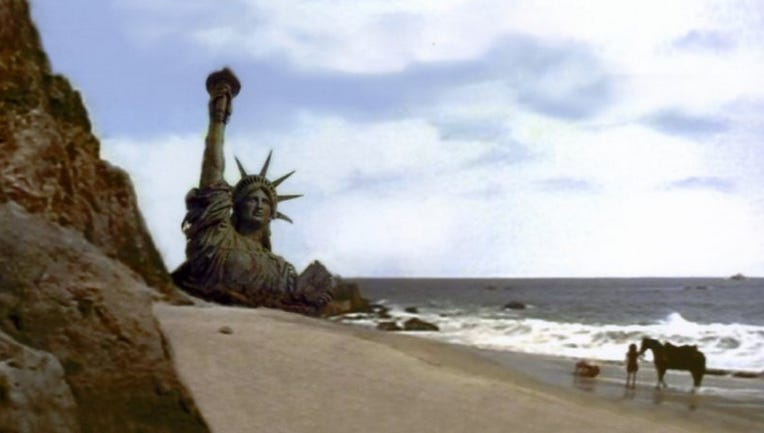
At first glance, American Conservatives’ insistence that their neighbors pose a threat to life, limb and liberty – while simultaneously denying that combustion engines could possibly be contributing to an actual global catastrophe – seems utterly bewildering. But we need only step back to see that their misplaced millenarianism is baked into Western, Christian, and especially American culture. From the Book of Revelations, to the Jonestown Massacre, to UFOs, to the ubiquity of the zombie genre, the end of the world thrums in the background of American life. Turn on PBS; an octogenarian relates seeing the first dust storm approach in 1930’s Oklahoma, and what does her mother yell to her? “Get in the house, the end of the world is coming!” Fantasy films whose sole purpose is (one would think) to distract us from the quotidian rhythms of our daily thoughts and lives, can’t help but zoom out in the final moments to reveal the Statue of Liberty corroded and listing from a long-passed catastrophe. From Dr. Strangelove, to preppers, to The Walking Dead, to preachers’ weekly pulpit invocations of a “Kingdom Come,” the assumption of an eventual world rupture is taken for granted. It is a culture-wide anxiety which, on an individual level, would be denied as silly and the ravings of “the crazies.” But look around with an objective eye and it is undeniable: we, as a people, are culturally primed for a world-ending cataclysm.
This sense of impending doom permeates Christianity, especially its charismatic and evangelical offshoots. During the early church’s rise in the shadow of a distrusting Roman Empire, martyrdom became the ultimate expression of connection with the Lord. To die a victim’s death, in the fashion of the son of God, came to embody the ultimate expression of devotion. And when the Christian sect came to dominate Roman politics, and therefore the levers of power, opponents of the Church (or often as not opponents within the church) were labeled as the heirs to the persecutors. Thus by the time of the crusades, those who took up the call to retake the holy land through violence would be bestowed in death with all the heavenly benefits of martyrdom. This view of the cosmically ordained righteousness of Christians and the demonic intentions of their foes pervades Western consciousness from Paul, to Constantine, to descriptions of the Vikings, to the Crusades, to conflicts with the Ottomans, to American explanations of the morality of slavery, right up to the modern American right’s belief in a heavenly mandate for their cause.
With this cultural priming, American whites have had to contend, first, with a genuine threat of obliteration from an ostensibly secular nuclear power. And now, the real threat passed, they are faced with a far more banal world-ending event. The march of demographics pre-ordains that Conservative whites will lose their voting majority in the future. This idea, framed in academic terms as a natural and neutral event, becomes in the hands of right-wing crack pots a premeditated ethnic cleansing: “replacement theory.” This seemingly inexorable movement towards voting minority (or more likely plurality) is paired with the depressing reality that their preferred policy prescriptions for isolating themselves from their Black neighbors has created a quality-of-life bottleneck that boomeranged back onto Conservative whites’ own children. Ubiquitous single-family zoning has limited the housing supply to the point that young people entering the job market are effectively priced out of housing in many areas. A current of anti-intellectualism coupled with a calculated defunding of schools at all levels post-Brown v. Board convinced many young whites, especially males, that college isn’t worth it, or else saddled them with crippling debt. This, combined with their now-unaffordable rent and the multi-thousand dollar depreciating asset they need just to get to work from the suburbs, compiles into one of the first falls in quality-of-life from one generation to the next in American history.
American Conservatives have painted themselves into a corner. Unlike European countries that adopted social policies to blunt the worst effects of capitalism, and thereby diffuse the left’s revolutionary zeal, American Conservatives cannot reconcile with policies that would accrue to Black people because they have spent decades building a political coalition based on the fundamental belief that hardworking-bluecollar-salt-of-the-earth-red-blooded-God-fearing-small-business-owners are solely deserving of social status in American culture. And so policies that might benefit these paragons of American virtue must be discarded out-of-hand if there is even a chance that the same benefit might accrue to the unworthy, the alien, the Welfare Queen. This leaves struggling white Americans up a creek – with a privileged position in the country’s cultural life that does not translate into the most basic promise of an improved quality-of-life for their children. These failures are internalized as the result of disdain from “Coastal Elites,” an impression which on a cultural level can certainly be accurate at times, but which on a political level requires the willful misinterpretation of liberal policy positions that would benefit Conservatives’ lauded rural working man as well.
And this is where the American Progressive movement has resoundingly failed. Ridiculing an opposing political coalition who is motivated by fear and perceived contempt is not only moronic politics, but more importantly evinces a misunderstanding of the phenomenon. Arendt, once again, lights the way,
The masses’ escape from reality is a verdict against the world in which they’re forced to live.
There are two ways to Trump voters’ hearts: the Social Security way, or the Cold War way. Either find a way to acknowledge their suffering, offer real solutions to their problems, and redirect their impulse for cultural dominance towards the creation of a shared identity with the nation as a whole; or find a credible, foreign, existential threat.
An exchange between one of the architects of the modern Christian political movement and a leader of America’s real existential threat illustrates the point:
President Ronald Reagan, “What would you do if the United States were suddenly attacked by someone from outer space? Would you help us?”