Let’s Remember Where Our Freedoms Come From

Dr. Lynda Alexander responded to my recent piece about Will Pelkey with a piece entitled “Let’s Celebrate Our Freedoms” in the Windsor Journal.

I have some thoughts.

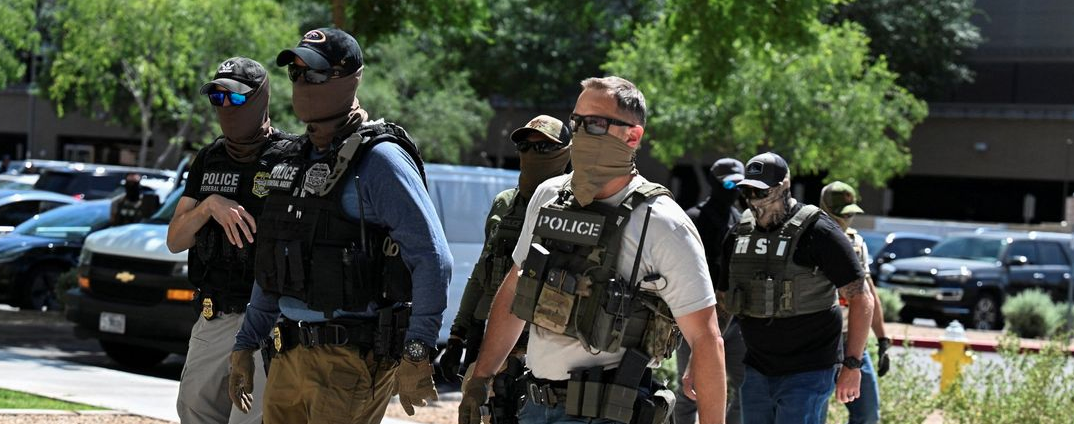
It may surprise some of you to learn that I grew up in a very conservative family of lifetime NRA members, libertarians, mainline conservatives, and believers of a variety of Christian faiths. Windsor has always reminded me of the floodplains on the north Potomac where I spent most winters hunting waterfowl, one more reason I’ve always felt at home here. Both sides of my family are from Mississippi. Vigorous political debates were a frequent occurrence at family gatherings in Natchez. Among the many topics in these discussions, I heard outrage over armed IRS officers, unelected judges, and federal incursions into state prerogatives. It was assumed that citizens should stay vigilant against unaccountable power. Imagine my surprise then at some of the same family members now gleefully cheering on warrantless “arrests” by masked federal officers.

My point isn’t to highlight hypocrisy (we all have our blind spots), only to note that I watched the conservative movement change from the inside. I have noticed a rhetorical tick among conservatives in Windsor that very much mirrors my family members’ newfound appreciation of maximalist government power. I think it’s worth teasing this out, because it’s worrying, and because I’m not sure they’re fully aware they’re doing it.

The opening line of Lynda’s piece is indicative, “Our founders granted us considerable freedoms in our constitution[sic].” This is a fundamental misunderstanding of the relationship between the people and the government. We are a free people. We are not granted rights: our rights are inalienable. The government is an instrument of our sovereignty. It does not dictate our rights to us.

Rights that are granted are rights that can be revoked. In Dr. Alexander’s formulation, the relationship between the citizens and the government is inverted. Rather than the government representing a sovereign people, the people become subjects to a government that is sovereign unto itself (or perhaps by divine right?), which is kinda’ what the framers were trying to avoid when they launched a rebellion against the anointed monarch of the globe’s most mighty empire.

This isn’t an isolated example. We see this kind of language slipping into local politicians’ rhetoric with alarming frequency. When discussing the recent assassination of Charlie Kirk, Councilor Ron Eleveld said the following, “Because you cannot accept the fact that someone does not agree with you, you have to use violence to quiet them down. In Nazi Germany they silenced the opposition, in Russia, China and North Korea they silence the opposition, even today. In America we do not silence the opposition. We have something called free speech. We should all defend the right to this Right in our Constitution.”

It’s a noble sentiment, but expressed in a way that dangerously inverts the Constitution’s intent. In this framing, individuals’ use of political violence is equated with government repression. The trouble is that the Constitution does not constrain individuals: the Constitution constrains the government. It even states this explicitly in the amendment Councilor Eleveld is referring to, “Congress shall make no law respecting an establishment of religion, or prohibiting the free exercise thereof; or abridging the freedom of speech…” We, the people, elect a representative government which passes laws to govern individual behavior. The Constitution protects us from overreach by that government.

When Councilor Eleveld confuses limits on government with limits on the people, he changes the Constitution from a shield into an instrument of censorship.

Other town Republicans have repeated this misunderstanding recently. Earlier this year, I pointed out that opponents of the road diet referendum had been very aggressive, yelling epithets from moving trucks (how brave…) and in one case brushing me with a pickup truck while I was putting out signs. Rather than address this alarming behavior, the Chair of the Republican Town Committee wrote that I was “tone policing.”

Dr. Alexander’s response is of a piece. She says, “In granting us freedom of speech and expression, by implication, [the framers] expected us to exercise our judgment.”  

The idea that the framers expected nothing but good judgement and uprightness in speech falls apart on the slightest contact with early American history. Many of the framers were polemicists of the first order and had no qualms hiring unscrupulous journalists to savage each other in the press. The career of James Thomas Callender is a good example of how the framers used their own First Amendment rights to publicly smear each other without mercy. I don’t hold this out as the paragon of upright behavior, only to point out that for the framers, freedom of speech was a good unto itself and was not contingent on the good intentions of the speaker. One glaring exception to this is John Adams’ Sedition Act, which is (and was at the time) widely regarded as an utterly shameful power grab.

Dr. Alexander goes on,

Speakers and writers are permitted to express their opinions without restrictions. These opinions include the interpretations, speculations and even at times, fabrication of information in order to make a particular point. And we are charged with investigating the motivation of the writers and speakers who have their own goals and agendas.

In short, Dr. Alexander read a piece laying out a factual critique of a government official and, rather than considering the claims against that official, she questions the motivations of the speaker. Seeing a citizen use freedom of speech to hold the government accountable, the very act with the framers sought especially to protect, Dr. Alexander sees nothing but poor judgement and distasteful agendas.

Perhaps it’s no wonder we see this kind of language slipping into local discussions of politics. We’re living through an utterly warped reactionary movement, one that has birthed the dystopian constitutional fiction of the Unitary Executive. For the first time in our nation’s history we have an actual secret police. The government is using its regulatory leverage over the private sector to silence voices it doesn’t like. And when millions of people took to the streets to state clearly that Donald Trump isn’t the sovereign, we are, he responded with shocking contempt by publishing imagery of himself, wearing a crown, dumping excrement on people who were (say it with me!) exercising their actual First Amendment rights.

So, fellow citizens, listen for this type of constitutional sophistry, and guard against ideas that turn the Constitution against us. Now more than ever, we must use our voices to hold power accountable.
Will Pelkey is Unfit to Serve

This piece appeared in the Windsor Journal on October 24th, 2025

Before the actual piece, I want to provide a brief meta discussion about why I chose to write this at all. Having a shit heel Town Councilor in a small town in Connecticut is pretty insignificant, in the grand scheme of things; so why bother?

Well, we’re in the midst of a fascist take-over in this country, and, contrary to the image they like to project, fascists tend to be small-time shit heels that aren’t worth the bother. That is, until they create a movement that swallows up a whole country. I don’t think Will Pelkey is a fascist. I think he sees the big shit heels and buys into their image of themselves. He’s using local government as a way to play act and to garner attention to himself, to make himself feel important.

And that’s how fascism takes hold, thousands of tiny, pathetic men (mostly men, anyway) donning the aesthetics of a mean, bullying movement to make themselves feel better.

We have to defeat this movement at the national level, but we also have to starve it of recruits from below by mercilessly reinforcing how pathetic these people are. We have to say it out loud, clear as sunshine.

That’s why I wrote this.


It’s election season, and we’re all exhausted. Politics has become increasingly ugly over the past few decades, prompting sentiments like Councilor Eleveld’s in this paper recently, “That is my biggest fear: that these sorts of situations happen and we don’t get good quality people, citizen legislators, coming forward willing to put their time in, for the simple fear they could end up with the target on their back.” Mr. Eleveld was speaking specifically about political violence, but I think his point can extend more broadly to the trolling, name-calling, bad faith, and meanness that pervades politics today. Good candidates, people who are genuinely interested in public service, don’t get into politics to engage in food fights.

Which is why I want to tell you about Councilor Will Pelkey.  
 
Mr. Pelkey has engaged in a pattern of behavior that is out of step with Windsor’s values, his oath of office, and basic decency. He repeatedly posted repugnant images of Representative Jane Garibay’s face superimposed on Jabba the Hutt, despite protests from both Democrats and Republicans that such behavior is harrassing. In a rather bizarre episode, he posted pictures, taken at a distance, of Black residents at a public swimming pool, asking if one of his colleagues on the Council was in the images (for the record, she was not). He bullied a seriously ill colleague on the Town Council, repeatedly calling for roll call votes to try to catch former Councilor Smith unconscious when he had to call into meetings from a hospital bed due to a quirk in the Council’s quorum rules. These parliamentary shenanigans were cruel and completely unnecessary.
 
Up to this point, everything I’ve described is just the odious behavior of an unserious person.  However, he also lied about police records, which violates his oath of office to “faithfully discharge” his duties as a Town Councilor.  
 
On March 6 of this year, Mr. Pelkey posted the following regarding the upcoming road diet referendum, “According to data received from Windsor PD, these same streets recorded only 4 accidents since 2017, and zero deaths.” In response to a Freedom of Information Act request, the Windsor Police Department revealed that there were, in fact, 85 collisions in that area during the specified time period (roughly 1/month), 16 of which resulted in injuries. Furthermore, the Police Department confirmed that it had not provided any data of this kind to any elected official or member of the public in the six months preceding the referendum. 

To be clear, Mr. Pelkey deliberately invoked the authority of the Windsor Police Department to mislead voters about basic facts concerning our physical safety. He did not “receive” data from Windsor PD. He made up safety statistics to make a political point. These are simple counts that Mr. Pelkey could have easily obtained or verified with the police had he bothered to try. This project has been under consideration for over two decades; it’s not like he didn’t have time to check. This was no mistake either. Mr. Pelkey doubled down on this claim in the original social media discussion despite being shown publicly available police data contradicting his assertion. The message was then repeated almost word-for-word, in print, by Concerned Citizens of Windsor, a political action committee that has been fined multiple times for state campaign finance violations and reporting lapses. 

His statements were obviously false to residents of the affected neighborhood, leading some to question the Police Department’s truthfulness on this issue. He eroded trust between the neighborhood and law enforcement, and he erased years of diligent, dangerous work by police and first responders from the public discourse.

Windsor police and first responders deserve better. Their jobs are hard enough without unserious politicians lying about what they’re doing. Our Town Councilors and state elected officials deserve better. Being an elected official is hard, but it shouldn’t come with open harassment from colleagues. Most importantly, Windsor residents deserve better. At a minimum, we deserve to be told the truth about our own safety by the people we elect to represent us.

Yes, politics has gotten uglier. But we, Windsor voters, don’t have to accept this kind of behavior here. Please vote for candidates who reflect Windsor’s values and who take their responsibility to us seriously.

Police Cameras & the Fugitive Slave Act

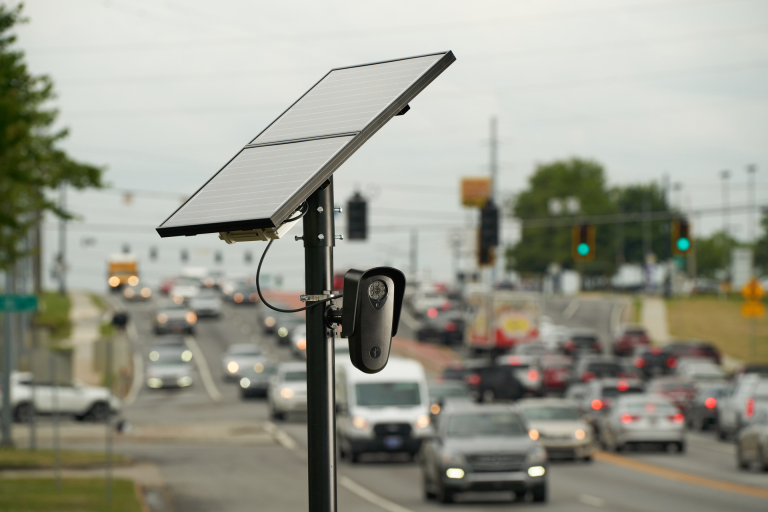
This letter was sent to the Town Council of Windsor Connecticut regarding an ongoing debate in the town over the use of video data collected by Windsor police and shared to outside agencies via Flock. FOIA requests to WPD had revealed numerous access incidents by federal immigration departments, and at least one incident of a Texas Sheriff's office accessing the system to search for someone for the stated reason that she had "had an abortion."

Dear Council Members,

I was unable to attend the Council meeting last night, but I did want to take the opportunity to share my concerns about the use of Flock cameras in our community.

There is no doubt that retroactive video data, shared across departments, can help solve crimes more quickly and at lower cost. Public safety is important, but any benefits must be carefully balanced against the rights and security of our residents.

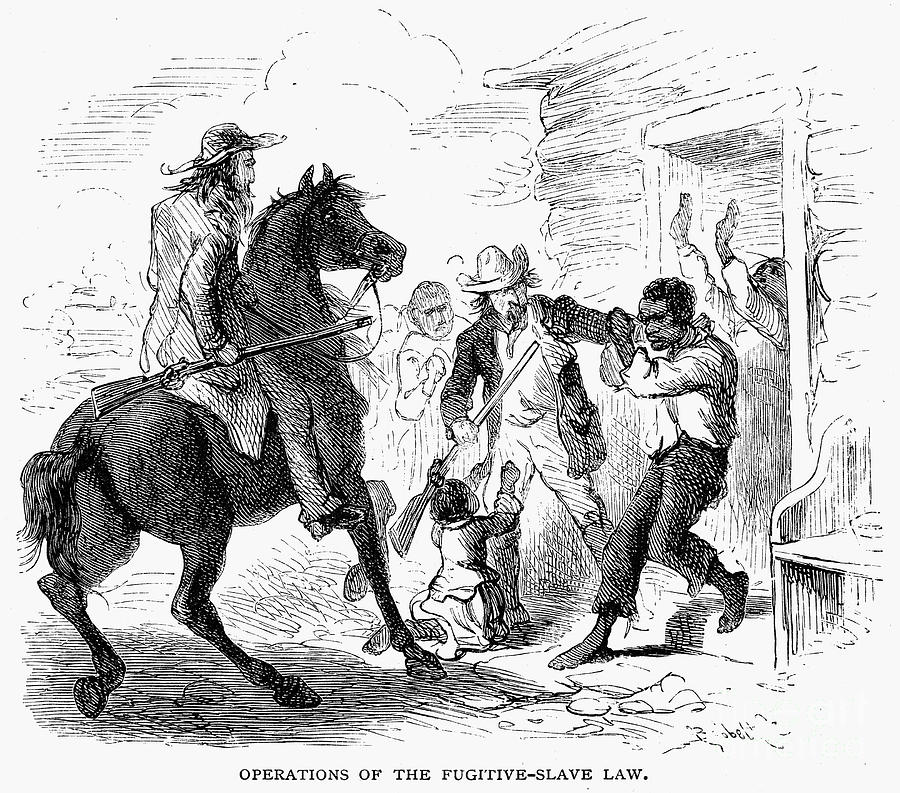
History warns us of the dangers of law enforcement tools being used across state lines in ways that undermine individual rights. To discourage enslaved people from escaping the barbaric laws of slave states, the Fugitive Slave Act co-opted other states’ law enforcement resources. “States rights,” in this case, could only be maintained by forcing other states to act against their own citizens’ conscience and the basic dignity and autonomy of people within their borders. The Fugitive Slave Act was a major factor leading to the Civil War and remains a stain on this nation’s history.

There are strong echoes of this now. Some states have criminalized reproductive health care for erstwhile protected classes of citizens, and have also criminalized providing aid to people trying to access that care. As with slavery, the states’ unequal treatment of people before the law is rationalized by religious belief and extra constitutional claims of “states’ rights.” These states are using technologies like Flock cameras to track their residents who travel elsewhere for legal medical procedures. They are also passing civil laws to extend their reach across state lines. This effectively deputizes their citizens to enforce state laws, akin to the bounty-hunting system that existed throughout the antebellum period.

In addition to this retrograde legal environment, we’ve also seen the emergence of masked federal agents abducting people and moving them between states without extradition, without meaningful accountability to the public, and without accountability to the judicial system. Immigrants, documented and undocumented, already face the constant threat of dislocation, deportation, and family separation. These paramilitary law enforcement resources can easily be refocused to impose unjust state laws across other states like our own. With one executive order, local camera data can be used to locate health care providers in our town and send them to face felony charges in other states.

While I understand the potential crime-solving value of these systems, I urge the Council to prioritize the rights and safety of Windsor’s residents and visitors. A prudent course would be to suspend implementation until the Council can guarantee that these systems will not expose Windsor residents, visitors, or providers to out-of-state legal risks.

Please act now to protect our neighbors and the medical professionals our community depends on.

Respectfully,
Keller Glass

This Is Not Normal

This piece appeared in the Windsor Journal on May 2, 2025.

Dear Neighbors,

Though I’ve lived in many places around the United States, I’m proud to have made Windsor my home. One thing I noticed right away when I started to get involved in local matters is Windsor’s deeply ingrained tradition of civility and bipartisanship. Even in the Land of Steady Habits, our civic culture stands out as civil, even cordial. Neighbors and political adversaries talk over beers and across fences. But in recent months, something in our civic culture has shifted, and not for the better.

During the Broad Street referendum in March, volunteers (especially women) were subjected to curses and epithets from passing cars. As I was putting up Yes signs in the Center, I was nearly struck by a pickup truck that veered out of its lane toward me, then sped through three red lights up Poquonock Avenue. Later, a prominent opponent of the project explained to me, in all seriousness, why someone might feel justified in attempting vehicular assault in the context of the referendum. This is not normal.

It didn’t stop there. During the same campaign, elected officials lied about crash statistics in the Center, facts that directly impact the physical safety of Windsor residents. Regardless of your views on lane widths, roundabouts, etc., our representatives have a duty to tell the truth, especially when it concerns public safety. These lies were amplified, and further distorted, by a local political action committee, “Concerned Windsor Citizens,” which, for all their supposed concern, repeatedly failed to meet even the most basic filing and attribution requirements under Connecticut campaign finance laws. They’ve paid several fines in recent months for these violations. Again, this is not normal.

Most recently, the same group ran an ad in this paper riddled with typos and grammatical errors, urging residents to “Make Note of who has those YES Signs as they are the One’s” [sic] who want to increase the town budget. Is this what we’ve come to—political discourse that reads like a ransom note?

The word “Orwellian” has become cliché in recent years, but sometimes the shoe fits. Orwell’s Nineteen Eighty-Four devotes entire chapters to the horror of a society where neighbors are encouraged to monitor and report on one another. He also warns of what happens when political actors view their opponents not just as wrong, but as inherently illegitimate. Once that idea sets in, all acts can be justified. That, too, is not normal.

I’ve been surprised by our reluctance to address this shift in political discourse in town. Yes, Windsor has a laudable tradition of civility. We don’t all have to agree: we won’t. But we should demand that civic and political groups engage the public with a good-faith commitment to the truth. We do not have to accept lies from public officials, and we absolutely cannot accept political intimidation. Civility without accountability does not serve the public good.

Sincerely,

Keller Glass

An Unfortunate Result

The piece appeared in the Windsor Journal in March of 2025.

Hello neighbors,

The referendum to approve the Broad Street Traffic Calming and Pedestrian Safety project failed by a roughly 42% to 58% in a high-turnout vote. I won’t sugarcoat it—this was a decisive result. The only district that supported the project was Windsor Center were the project is actually located, which is both telling and deeply disappointing.

I know this might sound odd right now, but I am so grateful for this experience. It has been a privilege to meet new friends and deepen existing relationships as we did the hard work of democracy together. I never expected this level of individual support, and I am in awe of the time and effort our friends and volunteers poured into this effort.

One unexpected outcome of our outreach was how many people came up to me, introduced themselves, and shared their personal stories of being injured in this neighborhood—or of friends and family members who have been hurt or killed. Just last week, a man told me about his brother, who was struck by a drunk driver on Bloomfield Ave and died at just 12 years old. It’s difficult to recall that conversation without tearing up. I can’t express what an honor it has been for neighbors to share their pain and their stories with me. We hear them, and we are not giving up on them.

We expected some NIMBY pushback. What we didn’t anticipate was how this referendum would take on the tone of a culture war, nor the outright misinformation spread by elected officials and even a few town employees. Insults and epithets were hurled at residents putting up YES signs, with greater frequency at our female volunteers. I also had to file a police report after putting up YES signs in the Center. A pickup truck swerved out of the travel lane to miss me and the car my daughter was napping in by inches, and then immediately ran all three red lights going up Poquonock Ave from Broad Street. We knew this would be an uphill battle, given the national climate, to say nothing of legitimate local concerns over property taxes. But we did not expect people’s anger and resentment to override Windsor’s tradition of bipartisanship and civil discourse. This passed the Town Council in a bi-partisan vote, after all. It’s incredibly difficult to have a reasoned conversation about detailed infrastructure plans in the middle of a culture war debate. Opponents of this project took full advantage, stoking fear and anxiety to make sure a rational, empathetic discussion never had a chance.

I respect the outcome of the referendum, but I am deeply saddened by the incursion of callousness, misinformation and political intimidation into Windsor politics. Broad Street remains dangerous. Windsor Center residents will attest to this fact, and publicly available data proves them right. We will continue to advocate to address this dangerous roadway in our neighborhood, and we will not be silenced or intimidated.

This project has suffered a major setback, but the support from Windsor Center points to a clear need for safety improvements in this neighborhood, much as other neighborhoods have concerns about speeding on their own roads. The town took a maximalist approach to Broad Street, which we fully supported because of the obvious need and the complications of doing this kind of work while meeting CTDOT standards on state roads. Pedestrianization often starts small, however—with inexpensive materials like paint and temporary concrete planters. Some opponents of the project expressed a desire to see more temporary fixes attempted before a full configuration: they may well get their wish. We will continue to support large-scale projects, but we’ll also advocate for neighborhood-level safety improvements throughout Windsor, wherever residents are unsafe.

All of this is to say: the feedback from the voters on this specific project was clear and we respect the outcome of the referendum, but we’re not done advocating for a safer Broad Street. Safety is a process, not a destination. We still live here. Collisions still occur with startling regularity. People are hurt. Lives are put at risk.

This road is still a tragedy waiting to happen. I sincerely hope that reasonable opponents of this project were earnest when they said it was the specifics of this project’s design and funding that they objected to, and that we don’t have to wait for a tragedy to implement common sense road safety measures.

Thank you again to everyone who voted, and thank you to everyone who poured their time, energy and stamps into making Windsor a safer, thriving community.

Sincerely,
Keller Glass
President, Citizens for a Thriving Windsor

Roundabouts and Road Diet Myths

This piece appeared in the Windsor Journal in February of 2025.

There are several persistent myths about roundabouts and road diets that often lead to misunderstanding. Here are a few of the most common ones:

“Roundabouts are dangerous.”

Decades of research show that roundabouts are safer for all users, especially pedestrians, who experience a 50-80% reduction in collisions, serious injuries, and fatalities.

“Roundabouts are a proven safety countermeasure because they can substantially reduce crashes that result in serious injury or death.” — Federal Highway Administration

“Roundabouts are safer intersections for all users.” — Connecticut Department of Transportation

“Roundabouts are designed to improve safety for all users, including pedestrians and bicycles.” — U.S. Department of Transportation

“Traffic-calming measures, such as roundabouts and speed bumps, are engineering approaches designed to reduce vehicular speed and, thus, decrease the number of pedestrian crashes and associated injuries.” — American Academy of Pediatrics

This is especially true for single-lane roundabouts like those proposed in the Broad Street Project, which consistently show reductions in all crash types, unlike some multi-lane designs.

“Drivers won’t know how to use them.”

Connecticut drivers adapt quickly to roundabouts. The two roundabouts installed in Glastonbury have resulted in 40% and 60% reductions in crashes at those intersections, as discussed in the Hartford Courant article “Glastonbury roundabouts significantly reducing collisions after 2 years in operation.”

First Selectman Ed Chmielewski of Salem said of the roundabout installed at the intersection of state roads 82 and 85, “I think it has saved lives.”

Granby development director Abby Kenyon, reflecting on the roundabout installed at Route 202 and Notch Road in 2020 remarked, “the complaints have really died down; the feedback now is largely positive.”

Roundabouts are increasingly common in Connecticut, and contrary to some claims, Connecticut residents have proven themselves perfectly capable of learning how to navigate them.

“Roundabouts slow down emergency response times.”

Roundabouts are far less likely to become backed up than lighted intersections, enabling traffic to clear for emergency vehicles more quickly. “Studies by the Federal Highway Administration have found that roundabouts can increase the traffic capacity by 30 percent to 50 percent compared to traditional intersections.” — The Open Transportation Journal.

Because they are better able to handle unexpected traffic surges and prevent backups, emergency vehicles can move through more efficiently. In free-flowing conditions, fire trucks, ambulances, and police vehicles can pass through without stopping, unlike at a red light.

“The project is too expensive.”

Roundabouts and road diets are more cost-effective than signalized intersections. They reduce the need for police enforcement, as speeding is controlled by design rather than active monitoring. This frees up Windsor’s police force for more pressing duties.

Roundabouts also save on infrastructure costs. The three traffic lights on Poquonock Avenue in Windsor Center are due for replacement, an expense that could exceed $1.5 million. Roundabouts eliminate the need for costly signal maintenance and use no electricity, leading to long-term savings. They also remain operational during power outages, ensuring safer roads in winter storms.

Residents will also save money. Roundabouts reduce fuel consumption by cutting idling time at red lights, lowering both fuel costs and travel time. They decrease property damage from crashes and reduce medical expenses, lost wages, and insurance costs due to fewer and less severe collisions.

As for the town budget, the total project cost is $6 million, with $3 million already secured from federal funds and $1 million from state transportation grants. Windsor is actively pursuing additional grants to cover the remaining balance.

Even in a worst-case scenario where no additional funding is secured, the estimated cost per household would be about $3 per month over five years. While any tax impact is a serious consideration, this project will enhance Windsor’s financial resilience and ultimately pay for itself through long-term savings at the state, town, and individual level.

“Nobody bikes or walks, so there’s no need for a road diet.”

This argument is circular: “We built an unsafe road, so people don’t walk or bike, therefore we don’t need to make it safer.” The reality is that Windsor’s roads see fatal crashes almost every year. Just because residents make the rational decision to avoid walking or biking on unsafe streets doesn’t mean the town has no obligation to make those street safer.

Road diets consistently lead to increased pedestrian and bicycle traffic by making streets feel safer. This, in turn, boosts local economic activity. A prime example is Hamburg, NY, “Completed in 2009, the project has resulted in a 60% decrease in crashes and 90% decrease in serious injuries. Unexpected by the State, the project has also catalyzed far-reaching social and economic benefits for the village, which has seen a steady increase in population and public programming. These include a farmer’s market, outdoor movie nights, garden walks, a street music festival and other events.” — Project for Public Spaces

Local business owners were also thrilled with the project’s results, “Our entire village is transformed. Not a day goes by in my store I don’t hear about how everyone loves our village. This project fulfilled every expectation and then some.” — Laura Hackathorn, Village Trustee.

Both roundabouts and road diets improve safety, reduce crashes, and create more livable, business-friendly streets. While myths persist, the data overwhelmingly supports their benefits—they work, and they work well.

This project is about making Windsor a safer, more connected, and more vibrant community—while saving lives and money in the process. Please join me in voting YES for the Broad Street Traffic Calming and Pedestrian Safety Project on March 11.

Broad Street Project Goes to Referendum

[ a version of the piece appeared in
the Windsor Journal in February of 2025 ]

In a decisive vote Monday night, the Windsor Town Council approved the ordinance for the Broad Street Traffic Calming and Pedestrian Safety Project with a 6-3 bipartisan majority, followed by a unanimous 9-0 vote to send the project to a public referendum on March 11, 2025.

The project has been decades in the making, driven by local residents and advanced through contributions from officials at every level of government. Discussions about improving safety and increasing foot traffic for local businesses began over 20 years ago with the Windsor Center Business Association, a group that later evolved into First Town Downtown. Despite strong local support, the project was repeatedly stalled by the Connecticut Department of Transportation (CTDOT), which historically opposed town-led changes to state-owned arterial roads. The initiative was later incorporated into Windsor’s 2014 Transit-Oriented Development Master Plan and the 2025 Plan of Conservation and Development, adopted in 2015.

Momentum for the project increased when the state legislature granted towns greater authority over state roads, allowing Windsor to seek funding. State Rep. Jane Garibay worked tirelessly to secure necessary funds, while Congressman John Larson secured federal support. Town staff also obtained grant funding to cover the balance of the road diet portion of the project. In 2023, residents successfully advocated for the inclusion of roundabouts to align the project with CTDOT’s Complete Streets Plan, which saw renewed emphasis under Transportation Commissioner Garrett Eucalitto. Town Manager Peter Souza and Economic Development Director Patrick McMahon helped guide the project through extensive design revisions and many public meetings over the years.

During Monday’s meeting, the Democratic caucus reaffirmed its focus on safety and emphasized the importance of giving Windsor residents a direct say in the project. The Republican caucus largely agreed with that principle but voiced concerns about the timing and scope of the initiative.

Among the three opposing votes, Councilors Ron Eleveld and Will Pelkey previously stated that they do not oppose the project on its merits, but believe the public needs more time to evaluate its full scope. Mr. Eleveld also expressed concerns that American drivers struggle to adapt to changes in road design. Pelkey has further suggested expanding the project to include additional pedestrian improvements, such as extending the west sidewalk of Broad Street into the right-of-way, closing the public library parking lot, and eliminating most or all driveway entrances onto Broad Street. Councilor Len Walker, the ranking Republican member, has not publicly explained his opposition. However, at a public meeting last year, he questioned the design philosophy of pedestrian safety features, including pedestrian refuge islands, telling a civil engineer, “Good luck with that.”

During Monday’s meeting, Mr. Eleveld cited a Michigan Department of Transportation study indicating that roundabouts have, in some cases, led to an increase in the total number of crashes, while acknowledging that the same study showed a significant reduction in deaths and serious injuries compared to signalized intersections. The Broad Street roundabouts are designed as single-lane entries and exits, a configuration that CTDOT data shows can reduce total crashes by 40% and serious injuries and fatalities by as much as 80% compared to traditional signalized intersections. The Michigan study cited by Eleveld, “Evaluating the Performance and Safety Effectiveness of Roundabouts – An Update,” highlights the critical difference between single-lane roundabouts, which saw an 8% increase in crashes in Michigan, and multi-lane roundabouts, where crashes rose 123%—while both designs still significantly reduced severe injuries and fatalities. As stated in the first sentence on the The Federal Highway Administration’s (FHWA) roundabout website, “Roundabouts are a Proven Safety Countermeasure because they can substantially reduce crashes that result in serious injury or death.”

Public comments on the project were largely positive, with supporters emphasizing the safety benefits and the potential increase in foot traffic for local businesses. Opponents raised concerns about potential tax implications, whether these projects are more suited for struggling Rust Belt cities, that the current configuration has failed to bring retail back, and the uncertainty of federal spending and its impact on funding. While concerns about the project’s impact on the town budget are understandable, further state funding remains a strong possibility. The notion that roundabouts and road diets are primarily used in Rust Belt towns is misleading—these design principles are standard in modern urban planning across industrialized nations. Supporters of the project agree that the current Broad Street layout is ineffective, which is why change is needed. As for federal funding uncertainty, turning down available funding now because the Supreme Court might overturn the Impoundment Act of 1974 would be a missed opportunity to improve local infrastructure.

Windsor Center has immense potential, but Broad Street remains a barrier to safety, economic activity, and community vibrancy. According to the Connecticut Crash Data Repository, Windsor averages about one crash per day, mostly on four-lane arterial roads. Broad Street alone sees about one crash per month—a concerning statistic for a district that depends on pedestrian activity. Statewide, nearly one person dies on Connecticut roads every day. Windsor has an opportunity to reduce that risk by implementing proven safety measures.

With the Town Council’s approval, the Broad Street Safety Project now moves to a March 11 referendum, where Windsor voters will have the final say. Absentee ballots will be available at Town Hall beginning February 18.

Please join me in making Windsor Center a safer, more vibrant place to walk, ride, and live.

Some Safety Is More First Than Others

[ This piece appeared in the
Windsor Journal in February of 2025 ]

The mid-air collision over the Potomac River this week is an unmitigated tragedy. As of this writing, all 67 people aboard both American Airlines Flight 5342 and the Army helicopter are presumed dead. The sudden loss of so many lives is horrifying and deeply saddening.

Tragedies like this—and far less severe aviation incidents—are always followed by rigorous investigations that lead to safety improvements. In South Korea, a recent crash that killed 179 people prompted the removal of many concrete structures near runways throughout the country. After the 2009 crash in Buffalo, New York, which killed 50 people, the FAA implemented sweeping changes, including stricter pilot fatigue rules, higher experience requirements, improved stall training, and a national pilot record database. Following last year’s Alaska Airlines Flight 1282 decompression incident, the FAA grounded all Boeing 737 MAX 9 aircraft, and the NTSB launched a full investigation.

Because of these rigorous investigations and strict accountability measures, air travel remains remarkably safe, even in spite of high-profile disasters like Flight 5342. The death rate per mile traveled by air is thousands of times lower than that of passenger vehicle travel. It’s a modern marvel that people can spend a lifetime flying and experience such negligible risk. In fact, the paradox almost explains itself: air travel feels scary, so we refuse to accept injury and death as inevitable—and we go to enormous lengths to make it as safe as possible.

But this raises an important question: if we refuse to accept death and injury as a normal part of air travel, why do we accept it as a normal part of automotive travel?

The comparison is striking. I recently drove through Windsor Center and saw the aftermath of a serious crash at the intersection in front of Geissler’s. The car’s hood was caved in, windows shattered. No emergency responders remained. Traffic flowed around the wreck, drivers adjusting slightly to navigate past it. I did the same. It was a relatively unusual sight—but not shocking. There was no media coverage of the crash. If a public figure had been involved or if the crash had caused a major traffic jam, maybe the news would have paid attention. But as it was, the incident passed unnoticed. Perhaps police issued a citation, but no one examined whether the intersection’s design played a role, whether vehicle visibility issues contributed, or whether both drivers had a clear instruction on right-of-way rules during their driver safety course. There was no systemic review—because we, as a society, don’t expect one. Car crashes are just a fact of life: they are banal.

The U.S. sees 46,000 auto-related deaths per year—the equivalent of an American Airlines Flight 5342 disaster happening every 12 hours. Every two months, we lose as many Americans to car crashes as we did in the entire Iraq and Afghanistan wars. Vulnerable populations—children, the elderly, the unhoused, and people with disabilities—are disproportionately affected. The deadliest day of the year for children, by far, is Halloween as hundreds of kids are hit by cars while trick-or-treating in their own neighborhoods. But these tragedies rarely make the news. The NTSB does not spring into action every time someone is struck in a crosswalk. Departments of transportation do initiate systematic reviews when people die in car crashes. We simply mourn, care for the injured, and move on.

Connecticut is not immune. As of this writing, someone has died on our roads every single day of 2025. Windsor is no exception either. According to the Connecticut Crash Data Repository, we experience traffic accidents almost daily and lose roughly one resident per year to auto-related deaths. The most serious crashes happen on four-lane arterial roads, but even local streets see their share of serious injuries. The sections of Poquonock Avenue and Broad Street under consideration in the Broad Street Safety Project have seen more than one crash per month over the past decade.

We do not accept this level of risk in any other part of our lives. And what makes our indifference even more striking is that these crashes don’t happen in private spaces. They happen on our roads—our public property. The only comparable cause of accidental death in America is gun violence. Unlike many states, Connecticut has taken a common-sense public health approach to gun regulation, leading to lower firearm deaths per capita than many other states, and less than half that of our automotive death rate.

Windsor has a rare opportunity to take meaningful action. Every design element in the Broad Street Safety Project is backed by decades of research showing benefits across the board. These projects have been proven to increase property values, boost sales tax revenue, spur development, lower municipal maintenance costs, reduce fuel consumption, lower insurance costs, reduce harmful air particulates, and shorten driver travel times. Towns from Pasadena to New Britain, Grand Rapids to Edgewater have demonstrated that well-planned traffic calming and pedestrian safety improvements lead to more vibrant, resilient, and economically sustainable communities.

But ultimately, this is about saving lives. If we do nothing, more people will be severely injured—or killed—on Broad Street, given the current crash rate and the decades-long lifespan of projects like this.

Do I wish the NTSB took automotive deaths as seriously as plane crashes? Yes. Do I wish the Connecticut DOT was more responsive to local safety concerns? Absolutely. But the reality is that these improvements happen at the local level. I trust the FAA and NTSB to take the tragedy in Washington seriously, and to take meaningful action to keep such tragedies from happening in the future. But if we want the same consideration for the tragedies we experience on our own roads—if we want a safer Broad Street and a more vibrant Windsor Center—we have to make it happen ourselves.

Please join me in taking this small step toward a safer country—and a huge step toward a safer Windsor.

Broad Street is Dangerous

[ This piece appeared in the Windsor Journal on December 18, 2024 ]

Several years ago, I sat down at The Bean with a cup of coffee and a laptop to write a letter to our town manager, urging him to consider bike lanes in the design of the Broad Street reconfiguration (commonly called the road diet). A few paragraphs in, a loud bang outside was followed by sirens. A man on a bicycle had been struck by a car at the intersection of Maple Avenue and Broad Street. An ambulance soon arrived to take the bicyclist to the hospital, leaving behind bits of broken headlight, the man’s bike, and blood splatter on the pavement.  
 
Scenes like this are all too familiar in the Center. Every day, ten thousand cars drive down Broad Street. Seven out of ten don’t stop in the Center—they’re just passing through. About one-third of these drivers exceed the 35 mph speed limit. That may not sound especially fast, but it has serious safety implications for our neighbors. Higher speeds mean drivers have less time to react, leading to more accidents. Multiple travel lanes encourage passing, speeding, and chaotic traffic flow. Unsurprisingly, Broad Street and other state roads in Windsor Center see dozens of crashes each year, many involving serious injuries.  
 
Higher speeds also lead to deadlier accidents. For pedestrians struck by cars, the chance of surviving decreases by 40% when the car’s speed increases from 30 mph to 40 mph. This is the environment many of our neighbors must navigate daily. Residents cross Broad Street for basic services: to visit the post office, file permits at Town Hall, or pick up prescriptions. Children cross the road to reach the Windsor Public Library after school. Families in the Center who walk their children to daycare on Palisado Avenue must traverse 50-foot crosswalks at busy intersections where cars can turn right on red, even during walk signals.

If we do not act, this problem is likely to get worse. Cars are getting bigger, and drivers are becoming ever more distracted. We can’t police our way out of this problem, and it won’t resolve itself. The core issue is the road’s design. It was built to move vehicles through town as quickly as possible, and it’s doing exactly that. Residents and visitors injured in crashes, parents afraid to let their children walk or bike in the Center, disabled residents forced to cross dangerous intersections for basic necessities; all are collateral damage of a design that prioritizes vehicle speed over our safety.  
 
We can do better. The Town Council is currently considering The Broad Street Traffic Calming and Pedestrian Safety Project, which includes essential safety upgrades: reducing Broad Street from four lanes to two with a center turn lane, bike lanes, roundabouts, and sidewalk bump-outs with shorter crosswalks. These design elements have been studied extensively for decades at both the federal and state levels. The evidence is clear and overwhelming: these changes save lives and improve safety for pedestrians, cyclists, and drivers alike.  
 
The town’s top priority must be the physical safety of the people who live here. Please vote in favor of the The Broad Street Traffic Calming and Pedestrian Safety Project on February 11th, 2025.

Windsor at a Crossroads

[ This article appeared in the Windsor Journal on August 23, 2024 ]


Our town is at a crossroads. With the upcoming Founders Square and other mixed-use developments, we have an opportunity to support this new growth and address long-standing safety concerns and make Windsor Center more vibrant and welcoming. The Center improvement plan—which includes options for reducing lanes on Broad Street, the installation of roundabouts at two key intersections, and dedicated bike lanes—is the right step forward for everyone; residents, businesses, and visitors alike.

Broad Street is not safe in its current form. With four lanes of traffic, it's a hazard for pedestrians, cyclists, and motorists alike. The wide expanse of asphalt discourages foot traffic, which in turn hampers the ability of local businesses to thrive. The lack of bike lanes forces cyclists to share the road with cars, creating a dangerous mix. The result is frequent vehicle accidents and serious injuries, with little economic benefit to Windsor Center to show for the thousands of daily vehicle trips through Broad Street, most of which do not stop in town. The current configuration does not serve our community's needs.

Reducing Broad Street from four lanes to two, with a center turning lane, will streamline traffic and make the Center a safer and more inviting place for pedestrians. This configuration has been proven to reduce speeding and accidents while maintaining traffic flow. The extra space gained from reducing lanes will be repurposed for dedicated on-street parking, bike lanes, improved greenery, and expanded sidewalk bump outs for pedestrians, enhancing the overall environment of the town center.

Adding bike lanes to Broad Street will make the Center safer and more accessible for everyone. A dedicated space for cyclists will reduce the likelihood of accidents and make biking a viable option for more residents. Research shows that bike lanes not only improve safety but can also boost local economies. Numerous studies have shown improved economic activity and property values near dedicated bike infrastructure, while also improving safety for cyclists of all ages and motorists who no longer have to share lanes with cyclists.

The proposed roundabouts where Poquonock Avenue intersects Bloomfield Avenue and Broad Street will improve traffic flow, safety, and walkability. Roundabouts can move many more vehicles than traditional lighted signals, meaning they are better able to handle unexpected spikes in traffic flow caused by backups from Interstate 91. Roundabouts also significantly reduce the likelihood of severe accidents, injuries, and deaths. Roundabouts keep traffic moving smoothly, reducing congestion and the frustration that comes with it. For pedestrians and cyclists, roundabouts provide shorter, safer, more predictable crossing points. Put simply, roundabouts save lives and are better at moving cars.

When combined, these design improvements will not only make our town safer, but also more economically vibrant. This project, in conjunction with the mixed-use developments in progress, offers Windsor the opportunity to leverage the Center's proximity to rail, air, and Interstate transportation, while providing a pleasant place where people want to spend their time and disposable income. Improved infrastructure will attract more visitors, increase foot traffic, and make our town a more desirable place to live, work, eat, and shop.

The Center improvement plan is more than just a set of infrastructure upgrades—it's a vision for a safer, more connected, and thriving community. The business community understands the value of these improvements. Center residents understand the value of these improvements. Civil engineers understand the value of these improvements. It's time for all of us to come together to support this plan. By making these changes, we can ensure that Windsor Center remains a place where people want to live, work, and visit for generations to come. The benefits are clear: let’s embrace this opportunity to enhance our town’s safety and economic future.